"...one of the best works of theoretical


"...this book might hold a key to one


vision science since Gibson."


of humanity's longstanding mysteries."


Dan Simons, author of The Invisible Gorilla


Stanislas Dehaene, author of Reading in the Brain


Made New Scientist "Top Books of 2009" Story
             
     
Top 10,
Eureka,
WIRED,
Seed,
PT,
WSJ,
PLOS,
more


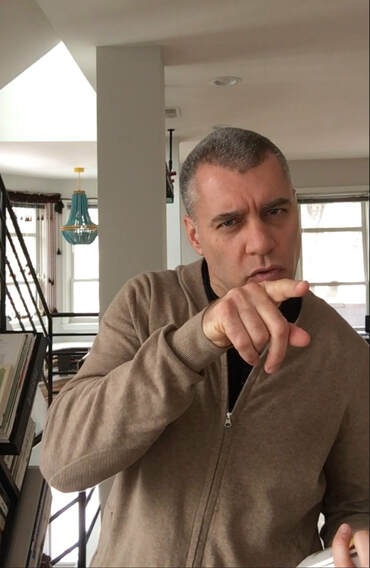
Photo credit: Rensselaer / Mark McCarty
MARK CHANGIZI,
changizi@2ai.org,
RESEARCH,
cv,
contact
...Director of Human Cognition at 2AI Labs,
     
Researching the mind, what it does, and where it's headed.
...writes on science at
ChangiziBlog (HUB)
--
Forbes
--
WIRED
--
Discover
   
--
Huff
--
WSJ
--
PT
--
Sci2.0
--
Seed
--
Sciam
--
NewSci
--
Telegraph
--
Atlantic
[
Twitter
--
G+
--
FB page
--
Stumble ]
RECENT NEWS
(All press stories)
     
See also Nature,
NPR.
MSNBC,
PBS,
Discovery,
Wash Post,
NY Times.
     
"Mark Changizi...one of most brilliant & creative psychologists of his generation"
MARK CHANGIZI
is an evolutionary neurobiologist aiming to grasp the ultimate foundations underlying
why we think, feel and see as we do. His
research
focuses on "why" questions, and he has made important discoveries such as on why we see
in color, why we see illusions, why we have forward-facing eyes, why letters are shaped
as they are, why the brain is organized as it is, why animals have as many limbs and
fingers as they do, and why the dictionary is organized as it is.
He
attended
the Thomas Jefferson High School for Science and Technology, and then went on
to the University of Virginia for a degree in physics and mathematics, and to the University
of Maryland for a PhD in math. In 2002 he won a prestigious Sloan-Swartz Fellowship in
Theoretical Neurobiology at Caltech, and in 2007 he became an assistant professor in
the Department of Cognitive Science at Rensselaer Polytechnic Institute. In 2010 he
took the post of Director of Human Cognition at a new research institute called 2ai Labs.
He has more than thirty scientific journal
articles, some of which have been covered in
news venues
such as the New York Times, Wall Street Journal, Newsweek and WIRED.
He has written three books,
THE BRAIN FROM 25,000 FEET (Kluwer 2003),
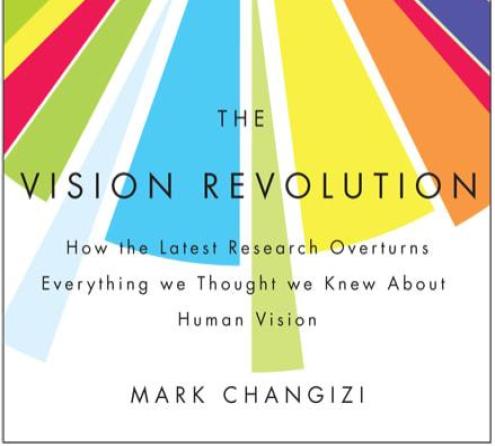
THE VISION REVOLUTION (Benbella 2009)
and
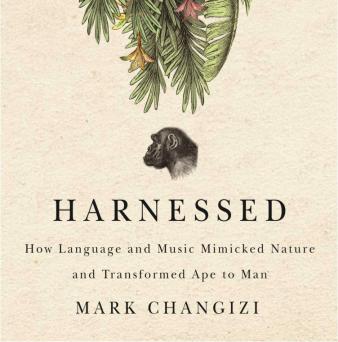
HARNESSED: How Language and Music Mimicked Nature and Transformed Ape to Man (Benbella 2011).
He is working on his fourth non-fiction book, this one on emotions and facial expressions, called
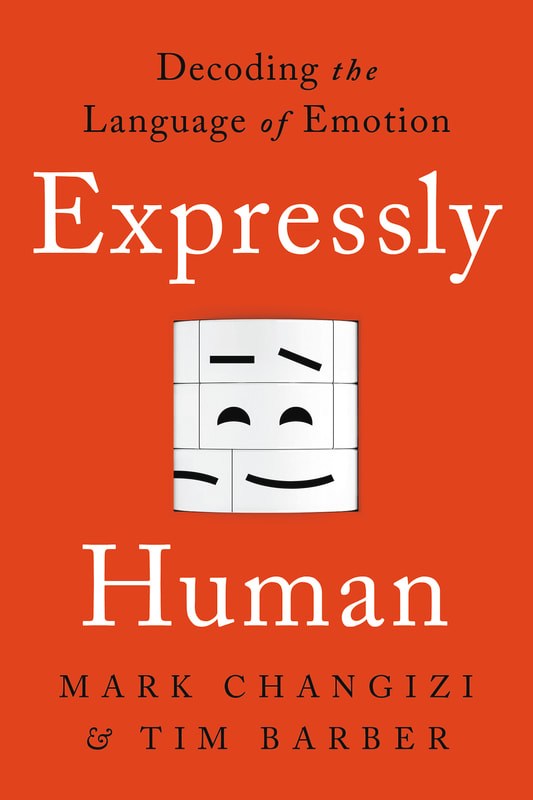
MAKING FACES: What Our Emotional Expressions Say, and How They Say It. He is simultaneously
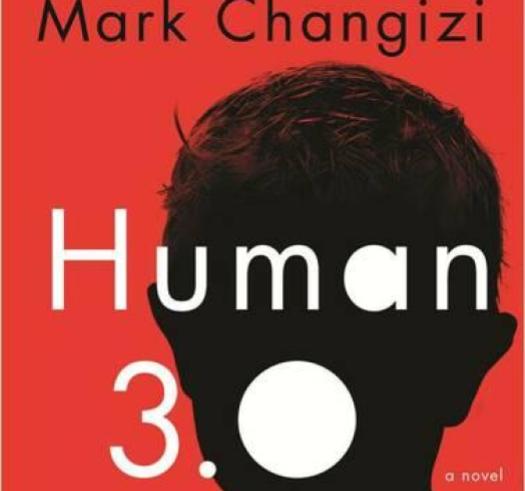
working on his first novel, called HUMAN.
Reactions to HARNESSED: How Language and Music Mimicked Nature and Transformed Ape to Man
(Book excerpt in Sciam):
Made New Scientist's
Top Ten Science Books of 2011, Sept, 2011.
"...this book might hold the key to one of humanity's longstanding mysteries..."
-- Stanislas Dehaene, author of Readiing in the Brain.
"...this remarkable book...promises to revolutionize thinking about what separates us from apes."
-- Daniel Simons, author of The Invissible Gorilla.
"...read it with fascination. I'd be...surprised if his main ideas...aren't on the right track." -- Frank Wilczek, Nobel laureate,
EDGE, Sept, 2011.
"...one of the most interesting and original books I've read in the past few years." -- Bill Benzon, author of Beethoven's Anvil.
"...opening up our ears and eyes to a whole new vision of humanity." -- David Rothenberg, author of Survival of the Beautiful.
"...brilliantly challenges...view...that the human brain's capacity for language [and music] is innate..." -- Cynthia Knight, Library Journal, Oct, 2011.
"...bound to arouse curiosity about the "missing links" that made language and music possible" -- Julie Sedivy,
Psychology Today, Dec, 2011.
"...builds a compelling case, and his wry style of storytelling makes for an entertaining read." --
Discover Magazine, Sept, 2011.
"...Generating controversial theories is not new to this evolutionary neurobiologist." -- Frank Bures,
Scientific American MIND, Nov, 2011.
"...makes a persuasive case in this fascinating volume." -- Bob Holmes,
New Scientist, Aug, 2011.
"...simple but striking premise to show how language and music...harness our brains." -- Richard P. Grant,
The Scientist, Jan, 2012.
"...how auditory cheesecake was made with mother nature's milk." -- Maria Popova,
Brain Pickings, Aug, 2011.
"...manages to accomplish the extraordinary." -- David DiSalvo,
Forbes, Aug, 2011.
"...classrooms of undergraduates standing in awe of him." -- Daniel Levitin,
Wall Street Journal, October, 2011.
"...systematic means of understanding much of the...ways language and music evolved." -- Richard Kade,
Leonardo, Aug, 2011.
"...reveals how and why language, speech and music exist." -- David Bradley
Euroscientist, Sept, 2011.
This book has been discussed widely in the press.
Reactions to THE VISION REVOLUTION
(Book excerpt in WSJ):
Made "Best Books of 2009" story.
-- New Scientist.
"...one of the best works of theoretical vision science since Gibson."
-- see also Invisible Gorilla's DDan Simons,
PsychToday, Nov, 2010.
"...this book is indispensable."
-- Daniel Piza,
Among "Best of the Year" books,
Estadao, Aug, 2010.
"...unusual in range & quality of his ideas, the clarity & humour with which he can lay them out."
-- Mind Hacks' Dr. Tom Stafford,
The Psychologist, June, 2010
"...may have a big effect on our understanding of the human brain."
-- Invisible Gorilla author Dr. CChris Chabris, Wall Street Journal, June 19, 2009.
"...fascinating book...", in a story on the best books of 2009
-- Amanda Gefter, New Scientist, Aug 25, 2010
"...will make you wonder the next time you notice someone blush"
-- Melinda Wenner, Scientific American MIND, July 2009
"...surprising, overturning theories that have dominated primatology since the 1970s"
-- Jennifer Curry, Barnes & Noble Spotlight Review, July 13, 2009
"...challenges common notions regarding sight. ...keep[s] them... dazzled."
-- Professor R. H. Cormack, Publishers Weekly (starred review), May 11, 2009
"...interesting and challenging new theories."
-- Professor Adrian G. Dyer,
Quarterly Review of Biology, June, 2010
"...demands the reader look at things in such a new way that one can never go back."
-- Paul Harris,
Journal of Behavioral Optometry, Dec, 2011.
"...could potentially revise much of what we think we know about human vision."
-- Jason G. Goldman,
Scientific American, May, 2012.
The book has also been mentioned in interviews in the
New York Times and
Scientific American,